
Tracking the information about your manuscript
Communicate with the editorial office
Query manuscript payment status Reviewer LoginCollecting, editing, reviewing and other affairs offices
Managing manuscripts
Managing author information and external review Expert Information Editor LoginOnline Review
Online Communication with the Editorial Department
Links
Page Views
Brief introduction

Journal: Journal of Guangdong Ocean University
Date of First Issue: 1975
Responsible Institution: Department of Education of Guangdong Province
Sponsor: Guangdong Ocean University
Publication frequency: Bimonthly
Phone: 0759-2396013, 0759-2396035
Email: gdouj@vip.163.com; gdouj@gdou.edu.cn
CN: 44-1635/N
ISSN: 1673-9159

Editors: LIU Fei, 17875197989 ; LIU Qingying, 18902504696; LIU Ling, 13828286627; ZENG Ting, 13476012662
Analysis of SPX1-GALR Signal Transduction Mechanism in Cynoglossus semilaevis
WANG Jing;GUO Huiying;CHEN Huapu;WANG Bin;Fisheries College of Guangdong Ocean University/Guangdong Research Center on Reproductive Control and Breeding Technology of Indigenous Valuable Fish Species;【Objective】 This study aims to identify the galanin receptors(galr) genes in the half-smooth tongue sole(Cynoglossus semilaevis), and elucidate the SPX1/GALRs signal transduction mechanism. 【Method】 The galr genes of half-smooth tongue sole were cloned, and their tissue expression patterns in various tissues of female fish were analyzed by real-time quantitative PCR. Dual-luciferase reporter assays were performed to detect changes in the activities of reporter plasmids(CRE-luc, SRE-luc, NFAT-RE-luc) for three signaling pathways, namely adenylate cyclase/protein kinase A(AC/PKA), phospholipase C/protein kinase C(PLC/PKC), and calcium ion(Ca2+) pathways, in COS-7 cells transfected with different pcDNA3.1-GALRs recombinant plasmids following treatment with SPX1, pathway-specific inhibitors, or a combination of both. 【Results】 The full-length open reading frames(ORF) of the cloned galr1a, galr1b, galr2b, galr type 1, and galr type 2 were 1 041, 1 152, 1 137, 971, and 930 bp, encoding receptor proteins of 346, 383, 379, 323, and 310 amino acids, respectively. Sequence analysis indicated that all five receptor subtypes belong to the G protein-coupled receptor family. Phylogenetic analysis revealed that half-smooth tongue sole galrs are closely related to those of Oreochromis niloticus, Seriola lalandi, and other fish species. Real-time quantitative PCR showed that galr1a mRNA was most highly expressed in the pituitary; galr1b mRNA was highly expressed in the kidney, intestine and ovary; and galr2b mRNA was most abundant in the brain. Both galr type 1 and galr type 2 mRNAs were widely expressed in various tissues, with galr type 1 showing the highest expression in the kidney and galr type 2 showing the highest expression in the intestine. Dual-luciferase reporter assays demonstrated that in cells expressing GALR1a, SPX1 significantly activated only SRE-luc(PKC pathway) activity. In cells expressing GALR2b, SPX1 significantly activated CRE-luc(PKA pathway), SRE-luc(PKC pathway), and NFAT-RE-luc(Ca2+ pathway) activities, and specific inhibitors of all three pathways significantly suppressed the SPX1-induced activities. However, in cells expressing GALR1b, GALR type 1, or GALR type 2, SPX1 treatment did not induce significant changes in the activities of the reporter plasmids for any of the three pathways. 【Conclusion】 Five GALR receptor subtypes(GALR1a, GALR1b, GALR2b, GALR type 1, and GALR type 2) are present in half-smooth tongue sole. SPX1 can activate the PKA, PKC and Ca2+ signaling pathways through GALR2b transduction. It only activates the PKC pathway through GALR1a transduction, while SPX1 can not activate downstream signaling through GALR1b, GALR type 1, or GALR type 2.
Mechanism of Aromatase Inhibitor-Induced Enhancement of Sperm Motility in Spotted Scat(Scatophagus argus)
LU Zhi;HUANG Yuanqing;JIANG Dongneng;ZHANG Meizhen;ZHU Chunhua;SHI Gang;LI Guangli;Guangdong Provincial Laboratory of Southern Marine Science and Engineering (Zhanjiang);【Objective】 This study aims to investigate the effect of letrozole on sperm motility in adult male spotted scat(Scatophagus argus) and develope a technique for enhancing sperm motility, thereby providing a theoretical basis and technical reference for improving the efficiency of artificial propagation of Scatophagus argus. 【Methods】 Adult males of S. argus with an initial body mass of(182.72 ± 18.10) g were orally administered with letrozole(LZ) for 30 days. Sperm motility, sperm ultrastructure, fertilization rate, serum hormone levels, and transcriptomic gene expression profiles were comprehensively analyzed to explore the mechanisms underlying LZ-induced sperm motility improvement. 【Results】 Computer-assisted sperm analysis(CASA) showed that LZ treatment significantly enhanced sperm motility, as evidenced by significantly higher curvilinear velocity [(301.9 ± 9.8) μm/s] and beatcross frequency [(9.2 ± 4.9) Hz] in LZ-treated group compared to those in control group [(274.2 ± 5.1) μm/s and(5.8 ± 4.2) Hz, respectively, P < 0.05]. Scanning electron microscopy(SEM) revealed no obvious morphological differences between the LZ-treated and control groups, whereas further transmission electron microscopy(TEM) observation demonstrated that letrozole ameliorated axonemal discontinuity and preserved central pair microtubule integrity. In addition, the fertilization rate significantly increased from 59.24% in the control group to 76.51% in the treatment group(P < 0.05). Serum hormone assay indicated that LZ treatment significantly upregulated serum levels of testosterone(T), 11-ketotestosterone(11-KT), cortisol(COR) and 17α,20β-dihydroxy-4-pregnen-3-one(DHP), while there was no significant difference in the level of 17 β – estradiol(E2) between the control group and the control group(P > 0.05). Transcriptome analysis identified 4 060 differentially expressed genes(DEGs), which were predominantly enriched in pathways related to steroidogenesis, meiosis, and sperm motility. Notably, key enzyme genes(Star, Hsd3b7, and Cyp19a1) and components of the TGF-β superfamily signaling pathway(Bmp1, Smad6, and Tgfbr2) were all upregulated. Furthermore, elevated expression of flagellar assembly-related genes(Ccdc173, Efhc1, and Spata1) provided a molecular explanation for the enhanced sperm motility. The qPCR results showed that the expression trends of six DEGs, including Bax, Smad6, Ccdc173, Efhc1, Dmc1, and Piwil1, were consistent with tRNA-seq analysis results. 【Conclusion】 Letrozole administration can significantly improve sperm motility in adult male S. argus, primarily by regulating steroid hormone synthesis pathways, the TGF-β superfamily signaling pathway, and other related pathways, thereby affecting genes associated with sperm motility.
Effects of Retinoic Acid Receptor Inhibitor in vitro Incubation on Nile Tilapia Gonad
LIN Kexin;LI Jinfeng;CHEN Mingzhu;HUANG Rihui;XU Qiongyu;GUO Hui;FENG Xuemin;PENG Dongjun;LI Guangli;SHI Hongjuan;ZHU Chunhua;Southern Marine Science and Engineering Guangdong Laboratory (Zhanjiang);【Objective】 To investigate the role and molecular mechanisms of retinoic acid receptor(RAR)-mediated retinoic acid(RA) signaling, as well as its effects on reproductive regulation in Nile tilapia(Oreochromis niloticus), thereby establishing a theoretical foundation for comprehending the molecular mechanisms underlying RAR-mediated RA signaling in the regulation of fish reproduction. 【Method】 Gonadal tissues(testis and ovary) of Nile tilapia were incubated in vitro with 50 nmol/L RAR inhibitor AGN193109 for 48 hours, and transcriptome analysis was performed to examine the effects of AGN193109 on Nile tilapia gonads. 【Result】 In the in vitro incubated testes, a total of 339 differentially expressed genes(DEGs) were identified, including 192 upregulated and 147 downregulated DEGs. In the in vitro incubated ovaries, 148 DEGs were screened, with 103 upregulated and 45 downregulated DEGs. Additionally, 13 co-expressed DEGs were identified in both in vitro incubated testes and ovaries. GO and KEGG enrichment analyses revealed that DEGs were significantly enriched in pathways related to reproduction and reproductive processes, metabolic processes, MAPK signaling pathway, TGF-β signaling pathway, retinol metabolism, and steroid hormone biosynthesis. qRT-PCR results showed that in the testis, treatment with the RAR inhibitor AGN193109 significantly downregulated the expression of retinol metabolism-related genes(cyp26b1, cyp1a, dhrs3b) and spermatogenesisrelated genes(tdgf1, tncb, sox8). In the ovaries, AGN193109 treatment significantly upregulated the expression of folliculer development-related genes(IL-1 β, tnfa, mapkapk3, fstl3) and ovulation-related genes(ptgs2b). α = 0.05. 【Conclusion】 RAR-mediated RA signaling may downregulate retinol metabolism-related genes(cyp26b1, cyp1a, dhrs3b) and simultaneously affect the expression of spermatogenesis-related(tdgf1, tncb, sox8) and follicle development-related(IL-1 β, tnfa, mapkapk3, fstl3) genes, thereby influencing reproductive activities in Nile tilapia.
Effects of Partial Replacement of Soybean Meal with Silkworm Excrement on Growth, Antioxidant Capacity, and Intestinal Health of Oreochromis niloticus
DENG Jiacheng;LI Jinxiu;CAO Mingpu;LIN Zeling;ZHAN Han;LIANG Yongran;WANG Shuqi;LI Ruixin;CHEN Cuiying;【Objective】 This experiment aims to investigate the effects of partially replacing soybean meal with silkworm excrement on the growth, antioxidant capacity, immune response, and intestinal health of Nile tilapia(Oreochromis niloticus), so as to provide a reference for improving the aquaculture efficiency of O. niloticus, and perfecting the strategy of soybean meal reduction and substitution. 【Method】 Four isonitrogenous and isolipidic experimental diets(named S0, S10, S20, and S30 group, respectively) were formulated by adding mass fraction 0%, 5%, 10%, and 15% of silkworm excrement to the basal diet to replace mass fraction 0%, 10%, 20%, and 30% of soybean meal. Nile tilapia with an initial body mass of(4.13 ± 0.02) g were fed with these diets for 56 days. The growth performance, body composition, serum immune and antioxidant indices, intestinal digestive enzyme activities and histomorphology, as well as the expression of inflammation-and barrier-related genes in the intestine and inflammation-and lipid metabolism-related genes in the liver were analyzed. 【Result】 The mass gain rate, specific growth rate, viscerosomatic index, and condition factor of O. niloticus showed an increasing trend in all silkworm excrement replacement groups, and their means in S20 and S30 groups were significantly higher than those in the control group(P < 0.05). However, silkworm excrement had no significant effects on survival rate, hepatosomatic index, intraperitoneal fat ratio, or feed conversion ratio(P > 0.05). With increasing dietary replacement level of silkworm excrement, the crude protein content in whole fish and muscle showed a decreasing trend. The crude protein content in whole fish of all replacement groups and in muscle of the S30 group were significantly lower than those of the control group(P < 0.05), whereas the crude protein and crude lipid contents in feces tended to increase with rising replacement level, with the crude protein in the S30 group being significantly higher than that of the control by 11.34%(P < 0.05). Serum total cholesterol levels were significantly elevated in all replacement groups. Serum alanine aminotransferase and acid phosphatase activities were highest in the S20 group and were significantly higher than those in the other groups(P < 0.05). However, no significant differences were observed in other serum biochemical indices or immune antioxidant indices among all groups(P > 0.05). Liver triglyceride content in all replacement groups showed a decreasing trend, with the S10 and S30 groups being significantly lower than the control by 44.68% and 72.34%, respectively(P < 0.05). Meanwhile, the expression levels of lipogenesis-related genes(fasn, accα) in the liver were down-regulated, while those of lipolysis-related genes(pparα, hsl) were up-regulated. With increasing replacement level, intestinal trypsin activity and intestinal villus length showed increasing trends; trypsin activity in the S30 group and villus length in the S20 and S30 groups were significantly higher than those of the control by 498.05%, 35.65%, and 32.23%, respectively(P < 0.05). Moreover, the expression levels of intestinal barrier-related genes(ocln, zo-1) were significantly up-regulated in all replacement groups, but intestinal muscularis thickness showed a marked decreasing trend, with the S20 and S30 groups being significantly lower than the control by 25.86% and 31.34%, respectively(P < 0.05). Furthermore, silkworm excrement replacement significantly upregulated the transcriptional expression levels of inflammation-related genes in both the liver and intestine, including the pro-inflammatory cytokine(tnf-α) in the liver, and the pro-inflammatory cytokines(tnf-α, il-1β) as well as the anti-inflammatory cytokine(il-22) in the intestine(P < 0.05). 【Conclusion】 Replacing no more than 20% of soybean meal with 10% silkworm excrement(by mass fraction) can significantly improve the growth performance, enhance intestinal structure, promote fat utilization, and reduce hepatic lipid deposition in Nile tilapia. However, excessive replacement will impair the digestion and utilization of protein and fat, and promote the occurrence of inflammation in the intestine and liver.
Effects of Sodium Propionate on Growth Performance, Immune Function and Intestinal Health of Cyprinus carpio Fed with High-fat Diet
XU Linqing;YU Wenzhi;CHENG Zhenyan;CUI Pei;SUN Jinhui;【Objective】 This study aims to investigate the effects of dietary sodium propionate on growth performance, immune function and intestinal health of Cyprinus carpio fed high-fat diets, and to provide theoretical reference for the application of sodium propionate in aquatic feeds. 【Methods】 C. carpio juveniles with an initial body mass of(18.91 ± 0.23) g were fed with three diets for 63 d, including the control diet(CO, with mass fraction 5.0% soybean oil), high-fat diet(HF, with mass fraction 15.0% soybean oil) and high-fat diet supplemented with sodium propionate(HF+SP, mass fractions 15.0%, 0.5% soybean oil and sodium propionate, respectively). Growth performance, serum immune enzyme activity, intestinal microbiota composition, and mRNA expression of hepatopancreatic and intestinal related genes were determined after the feeding trial. 【Results】 Compared with the CO group, the mass gain rate), specific growth rate, viscerosomatic index and hepatosomatic index of carp in the HF group were significantly increased(P < 0.05), while the feed conversion ratio was significantly decreased(P < 0.05). The mRNA expression levels of hepatic CPT-1, ACCAα, FAS and SREBP-1c were significantly upregulated(P < 0.05). Histological observation revealed massive lipid droplet accumulation, nuclear compression and displacement in the hepatopancreas. The intestinal mRNA expression levels of NF-κB and IL-10 were significantly downregulated(P < 0.05). The Shannon index of intestinal contents decreased, indicating reduced microbial richness and disrupted community structure. Compared with the HF group, no significant differences were observed in growth performance of fish in the HF+SP group, while the HSI was significantly reduced(P < 0.05). The activities of serum lysozyme(LZM) and catalase(CAT) were significantly elevated(P < 0.05). The hepatic mRNA expression of ACOX1 and PPARα were significantly upregulated, whereas SREBP-1c expression was significantly downregulated(P < 0.05). Hepatopancreatic histology showed fewer lipid droplets and alleviated vacuolation. The intestinal mRNA expression of TNF-α and IL-1β were significantly decreased(P < 0.05). The Ace, Chao 1, Shannon and Sobs indices of intestinal microbiota were significantly increased(P < 0.05), accompanied by elevated relative abundances of beneficial taxa including phylum Chloroflexota and genus Gemmobacter, which improved overall microbial diversity. 【Conclusion】 Under the conditions of this study, dietary supplementation with mass fraction 0.5% sodium propionate can reduce the elevated hepatosomatic index, improve lipid metabolism capacity, alleviate hepatopancreatic lipid deposition, and mitigate multiple adverse damages induced by high-fat diet stress in C. carpio.























Response and Risk Typing of Coastal Storm Surge in Lianyungang Based on Typhoon Track Clustering
LIU Rui;WANG Dewei;ZHAO Shuaikang;TANG Jierui;LI Xue;QIAO Wenli;【Objective】 This study aims to reveal the response differences and risk characteristics of coastal storm surge in Lianyungang under different typhoon track types, providing a theoretical basis for classified storm surge warning, risk identification, and disaster prevention and mitigation along the northern Jiangsu coast. 【Methods】 Hourly storm surges were calculated based on the data of 28 typhoon events affecting Lianyungang from 2002 to 2024 and records of tidal-gauge observations, Kmeans clustering was used to classify typhoon tracks, and the surge distribution, monthly characteristics, and interannual variations under different track types were analyzed. 【Results and Conclusion】 The typhoon tracks affecting Lianyungang were classified into four types: northward offshore, landfall-recurving, offshore-landfall, and peripheral-influence tracks. Among them, the offshore-landfall type occurred most frequently, accounting for 46.4%. The northward offshore type produced the highest overall surge level, with a maximum surge of 1.39 m and an average surge of 0.26 m, indicating overall water-level elevation and extreme high-surge risk. The landfall-recurving type had a maximum surge of 1.33 m and an average surge of 0.23 m, with relatively weak negative surges, indicating a relatively stable positive-surge risk. The offshore-landfall type had a maximum surge of 1.37 m, a minimum surge of-0.96 m, and a range of 2.33 m, indicating strong positive and negative surge fluctuations and abrupt extreme-response risk. The peripheral-influence type had a maximum surge of 0.56 m and an average surge of 0.17 m, showing a relatively weak peripheral-influence risk. Typhoon storm surges mainly occurred from June to September, with July and August accounting for 67.9% of the total events and showing the highest occurrence frequency, while the proportion of moderate-intensity events was relatively high in August and September. Therefore, the high-occurrence period of typhoon storm surges in Lianyungang was concentrated from midsummer to early autumn. During the study period, only Category IV and Category V typhoon storm surges occurred along the Lianyungang coast, indicating that typhoon storm surges in Lianyungang were mainly low-to moderateintensity events.
[Downloads: 1 ] [Citations: 0 ] [Reads: 1 ] HTML PDF Cite this article
Effects of Replacing Squid Paste with Chicken Liver Paste on Intestinal Antioxidant Capacity, Microbiota, and Transcriptome for Pearl Gentian Grouper(Epinephelus fuscoguttatus ♀ × Epinephelus lanceolatus ♂)
LIANG Peng;LIN Huaxing;CHEN Jiandong;JIN Honghao;YANG Yundeng;XUAN Bairu;TAN Beiping;YANG Qihui;【Objective】 This study aims to evaluate the effects of dietary replacement of squid paste(SP) with chicken liver paste(CLP) on antioxidant capacity, intestinal morphology, gut microbiota, and intestinal transcriptome for pearl gentian grouper(Epinephelus fuscoguttatus ♀ × Epinephelus lanceolatus ♂), and to assess its potential as an alternative ingredient to squid paste. 【Methods】 Pearl gentian grouper with an initial body mass of(23.09 ± 0.04) g were assigned to 6 dietary treatments. The control diet(CLP-0) contained mass fraction 5.00% squid paste and no chicken liver paste, whereas the remaining diets where chicken liver paste was included at the expense of squid paste in equal gradients, namely the dietary levels of squid paste were set at 4.00%, 3.00%, 2.00%, 1.00%, and 0.00%, respectively, while the corresponding levels of chicken liver paste were increased to 1.00%, 2.00%, 3.00%, 4.00%, and 5.00%, named CLP-1 to CLP-5, respectively. An 8 week feeding trial was conducted. Then, the growth performance and antioxidant-related indices were analyzed, as well as the histological observation, intestinal microbiota sequencing, and transcriptome sequencing were conducted. 【Results】 The survival rate of pearl gentian grouper remained at 100% in all treatment groups. Compared with the control group, the final mean body mass [(84.19 ± 2.93) g] of fish in the CLP-1 group was significantly increased(P < 0.05), while the feed conversion ratio(0.89 ± 0.01) was significantly reduced(P < 0.05). No significant differences in final mean body mass or feed conversion ratio were observed between the other replacement groups and the control group(P > 0.05). SOD activity in all replacement groups [(59.10 ± 5.60) to(90.55 ± 6.95) ng/mg] significantly increased compared to that in the control group [(39.16 ± 4.31) ng/mg, P < 0.05). CAT activity significantly increased in the CLP-1, CLP-2, CLP-4, and CLP-5 groups(P < 0.05). T-AOC in the CLP-1, CLP-2, and CLP-5 groups [from(8.83 ± 0.44) to(9.53 ± 0.38) U/mg) significantly increased, whereas that in the CLP-4 group significantly decreased to(5.35 ± 0.55) U/mg(P < 0.05). Histological observation showed that, compared with the control group, the intestinal villi in the CLP-1 and CLP-2 groups were intact in structure and neatly arranged. The muscular layer thickness significantly increased in all replacement groups [from(95.12 ± 3.19) to(147.81 ± 1.56) μm] compared to that in the control group [(55.85 ± 2.34) μm, P < 0.05]. Microbiota analysis showed that, compared with the control group, the mean relative abundances of Pseudomonadota, Vibrionaceae, and Acinetobacter tended to be lower in the CLP-2 group, whereas those of Fusobacteriota, Fusobacteriaceae, and Cetobacterium tended to be higher. Transcriptome analysis identified 800 differentially expressed genes between the CLP-1 and CLP-0 groups, including 352 upregulated and 448 downregulated genes. Gene Ontology(GO) enrichment analysis indicated that these differentially expressed genes were mainly associated with cellular process, metabolic process, localization, binding, catalytic activity, and transporter activity. Kyoto Encyclopedia of Genes and Genomes(KEGG) enrichment analysis showed that the differentially expressed genes were mainly enriched in pathways related to protein digestion and absorption, vitamin digestion and absorption, biotin metabolism, cholesterol metabolism, fat digestion and absorption, bile acid metabolism, and the intestinal immune network for IgA production. 【Conclusion】 Under the present experimental conditions, replacing SP with 1.00% or 2.00% CLP contributed to improved intestinal morphology and enhanced intestinal antioxidant capacity for pearl gentian grouper, and the modulatory effect of 2.00% CLP on gut microbiota was more evident. In addition, dietary inclusion of 1.00% chicken liver paste modulated the intestinal transcriptomic profile, with differentially expressed genes mainly enriched in pathways related to nutrient digestion and absorption, lipid metabolism, bile acid metabolism, and mucosal immunity.
[Downloads: 88 ] [Citations: 0 ] [Reads: 6 ] HTML PDF Cite this article
Effects of Slightly Acidic Electrolyzed Water Combined with Ultrasonic Sterilization on Actin Structure of Tuna Meat
SUN Xiejun;LIU Xiaofang;LI Xiuxia;WANG Zhen;LI Jianrong;【Objective】 To study the effect of slightly acidic electrolyzed water and ultrasonic sterilization on the actin structure and cathepsin activity of Thunnus obesus during storage at 0 ℃, and the effect of cathepsin B on its actin degradation was further explored. 【Methods】 Untreated tuna was used as control, the tuna was sterilized with 55 mg/mL slightly acidic electrolytic water and 280 W ultrasonic treatment for 5 min. The changes of actin structure and related cathepsin activity of the refrigerated fish meat were analyzed by Differential Scanning Calorimetry(DSC), Fourier Transform Infrared Spectroscopy(FTIR), and endogenous fluorescence spectroscopy. Combined with the activities of cathepsins B, L, and D and molecular docking techniques, the changes in myosin structure and related cathepsin activities in tuna meat during storage at 0 ℃ after sterilization were investigated.【Results】 The electrophoretic bands of actin in control group were shallower, the decrease rate of enthalpy of denaturation in the treatment group was lower than that in the control group, α-helix decreased by 69.09% in the control group and 41.33% in the experimental group. The stability of tryptophan residues in the treatment group was higher. Molecular docking showed that the polar solvation energy of actin-cathepsin B could reach-2 179.70 kJ/mol, and the hydrogen bond between the two was more frequent. 【Conclusion】 Actin in the treatment group has better thermal stability and can better protect the secondary and tertiary structure of actin. Cathepsin B plays a key role in the degradation of actin in fish. The driving force of the binding of actin and cathepsin B is polar solvation energy, and hydrogen bond plays a major role in the binding of both. The study can provide a theoretical reference for the application of weakly acidic electrolytic water in tuna storage and freshkeeping.
[Downloads: 267 ] [Citations: 0 ] [Reads: 8 ] HTML PDF Cite this article
Effect of Different Oxides in Natural Clay on the Pyrolysis of Spirulina
LIU Kai;XU Qing;SU Yingchen;【Objective】To investigate the effect of common oxides (Al_2O3,MgO,and SiO2) in clay on the pyrolysis behavior of Spirulina.【Method】Thermogravimetric analysis (TGA) and fast pyrolysis combined with gas chromatography-mass spectrometry (GC-MS) were used to analyze the pyrolysis process and products of Spirulina.The catalytic effects of the oxides were evaluated using the FlynmWall-Ozawa (FWO) and Kissinger-Akahira-Sunose (KAS) kinetic models.The differences in pyrolysis temperature,residue mass,and product composition with and without the addition of oxides were compared.【Results】The introduction of oxides expanded the pyrolysis temperature range of Spirulina.SiO2 increased the yield of coke.MgO,as an alkaline catalyst,significantly inhibited the formation of acidic compounds in the pyrolysis oil,reducing their yield from 23.49%to 10.66%.MgOexhibited the strongest catalytic effect on Spirulina pyrolysis.The catalytic effectiveness followed the order:MgO>Al_2O3>SiO2.Kinetic analysis showed that after the addition of oxides,the average activation energy of Spirulina pyrolysis decreased from 207.84 kJ/mol to 196.88 kJ/mol (Al_2O3),188.23kJ/mol (MgO),and 205.77 kJ/mol (SiO2).【Conclusion】This study demonstrates that clay oxides significantly influence the distribution of pyrolysis products and energy consumption in Spirulina pyrolysis.Al_2O3 and MgO exhibit notable catalytic effects,while SiO2 primarily serves as a heat transfer medium.This provides important theoretical support for the high-value pyrolysis of Spirulina.
[Downloads: 116 ] [Citations: 0 ] [Reads: 9 ] HTML PDF Cite this article
Isolation of Tetragenococcus halophilus from High-salt Aquatic Products and Soy Sauce Mash and Correlation betweenTheir Salt and Acid Tolerance and Gene Features
LYU Ranhui;ZHONG Yanhua;YOU Yang;YUAN Runhan;GUAN Enyi;DUAN Shan;【Objective】 Compare the differences in the core gene families of better and worse strains of Tetragenococcus halophilus in terms of salt and acid tolerance and screen the metabolic pathways and genes that may be related to salt and acid tolerance. 【Methods】 T. halophilus were isolated from highly salt aquatic products and soy sauce mash, identified by 16S rDNA sequencing.Their physiological and biochemical features were identified and salt and acid tolerance were tested. The strains with obvious differences in salt and acid resistance were classified respectively. Further genome sequencing was performed on 17 strains based on Illumina platform to compare the differences in the core gene families of the strains with obvious differences in salt and acid resistance. Respectively, the KEGG pathway and GO function were enriched and analysed for the specific core gene families of the strains with better salt-and acid-tolerance abilities. 【Results and conclusion】 All 17 strains differed in physiological and biochemical characterization, but all showed negativity for β-galactoside and xylose,and positivity for fructose, sorbose and D-ribose. Tolerance results showed significant differences among the strains. The results of genome sequencing indicated that the strains with better salt tolerance possessed 294 unique core gene families, which were mainly enriched in the KEGG pathways of pentose phosphate pathway, methane metabolism, metabolism of ascorbic acid and aldic acid, and phosphotransferase system(PTS), whilein GO function, were mainly enriched in the processes of localization, transport, establishment of localization, DNA recombination, and DNA metabolism. The strains with better acid tolerance had 191 unique core gene families, which were mainly enriched in the KEGG pathways of fructose and mannose metabolism, starch and sucrose metabolism, carotenoid biosynthesis, amino acid and nucleotide metabolism, and PTS., whilein GO function, were mainly enriched in DNA recombination and DNA metabolism processes. The above pathways and functions may encompass gene features associated with salt and acid resistant properties of T. halophilus. Further analysis revealed that the genes enriched in the PTS were exactly the same for the two unique core gene families, and these genes might beclosely related to the resistance mechanism of T. halophilus.
[Downloads: 208 ] [Citations: 0 ] [Reads: 11 ] HTML PDF Cite this article
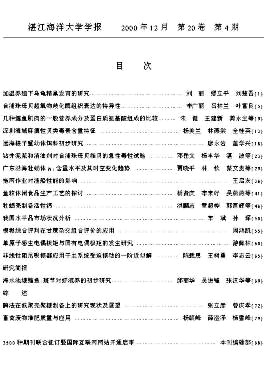
Several Main Calculating Equations of Properties Parameter of LiBr-H_2O
Jia Mingsheng (Engineering College of Zhanjiang Ocean University, Zhanjiang, Guangdong, 524025)In this paper, the author makes regressive analysis of the practical data of LiBr H 2O's properties and puts forward balanced equation of LiBr H 2O and calculating equations of properties parameter about viscosity, crystalline temperature, density, specific heat at constant pressure and enthalpy, etc. The equation in regressive and inductive method has high precision and it can meet the demands of thermodynamic calculation and heat transfer calculation for two stage LiBr H 2O absorption refrigeration cycle.
The Control of Eutrophic Water in Ponds by Floating-bed Soilless Culture of Plants
Bing Xuwen Chen Jiachang (Freshwater Fisheries Research Center of Chinese Academy of Fishery Sciences, Wuxi Jiangsu 214081)The control of eutrophic water in ponds were tested by culturing landscape plant canna ( Cana generalis Bailey) on soilless floating beds. The results indicated that the coverage of the landscape plant correlated positively with the removal rates of nitrogen and phosphorus in pond water, and increase of the coverage rate of the landscape plant could increase removal rate, conductivity and chlorophyll a also significantly decreased. Results showed that water quality of eutrophic ponds was improved significantly. In eutrophic ponds , the 20% coverage of the landscape plant would be the best.
Effect of Heat Stress on Biochemical Indices in Serum and Endocrinic Function of Broilers
Liu You ;Lin Hongying; Luo Dongjun;The effect of heatstress on broilers was studied in this paper by determining theperformance,biochemical and endocrinic indices in serum The result shows that,a fewindices suchas, the body weight,feed conversion ratio,average daily weight gain, the serum protern,albumin,calcium,phosphorus and thyroxine (T3T4) were all declined significantly (P<0. 05 or P<0.01 ) in the experimental group at 30 and 50 days old. The concentration of serum potassiumdeclined significanty only in 30 days, but the concentration of serum urea nitrogen, chlorine,cortisol and the activity of lactic dehydrogense,creatine phosphokinase of serum sodium,glucosewere not affected by heat stress.
Compendium of Folk Narration
Dong Naibin Cheng Qiang (College of Literature, Shanghai University, Shanghai, 200031, China)Folk narration refers to the oral narrative activities, of common people living in the bottom of the society, mainly their artistic narration. Along with the basic character of oral forms, they have the characters of flexibility, vaporization, anonymous having regional and historical texts by deletion, vivid forms and contents which cater for the public mentality, thoughts and interests, combining real facts with fantasy, as well as contradicting and compromising main stream of culture. Folk narration exists not only in the folk tales, but also in the literary texts by the letters, which reinforce the oral forms into the written forms and then into the classics. The classic texts become the new source of folk narration, which is considered as the foundation of it.
Research Survey of Chi Li's Novels in the Past Ten Years
YE Lan-tao(Literature college of Guangdong Ocean University,Zhanjiang,Guangdong,524088)Chi Li's novels as important representative texts of Chinese contemporary literature caused a lot of research and comments.These comments attempted to explain various kinds of meanings of Chi Li's novels from the following four respects.: First,awakening of woman's consciousness.Second,all boring and helpless life viewpoints.Third,internal and external comparison of themes and structures.Forth,survey and review.This paper attempts to perfect and strengthen the knowledge of Chi Li's novels through summarizing the state in the past ten years.
On the Symbolism of Xue Baocai and Lin Daiyu
WANG Qin(Yangjiang Vocational and Technological College,Yangjiang 529500,China)Xue Baocai and Lin Daiyu were two main characters in A Dream in Red Mansions.Xue Baocai embodied the Confucianist thoughts of cultivating oneself and maintaining family harmony while Lin Daiyu embodied the Taoist thoughts of moral quality of independence.The thoughts of these two heroines were the reflection of the social life and natural life of the urban and rurat class.In this article,the author tries to explore the symbolism embodied by these two characters by analyzing the images of these two characters.
Research on Characters in The Book of Poetry in Recent Thirty Years
CHEN Li;ZHU Li-hui;It summed up the achievements of characterization in The Book of Poetry from four parts:image analysis, artistry, the cause of characteristics and moral implication in the past 30 years. The appearance and excellent qualities were described in the analysis on the female. Meanwhile, moral characters were described in the analysis about the male. The artistic techniques were always expressed by Fu, Bi, Xing and the general technique of character description. The cause of the characteristics might be the religious consciousness, aesthetic tradition and social background. The moral implication included such moral consciousness as filial piety and fraternal duty, integrity, loyalty and patriotism. The limitations of the study were the repeating analyses on characterization, lacking of deeper digging in artistic techniques and realistic significance about moral implication.
Several Main Calculating Equations of Properties Parameter of LiBr-H_2O
Jia Mingsheng (Engineering College of Zhanjiang Ocean University, Zhanjiang, Guangdong, 524025)In this paper, the author makes regressive analysis of the practical data of LiBr H 2O's properties and puts forward balanced equation of LiBr H 2O and calculating equations of properties parameter about viscosity, crystalline temperature, density, specific heat at constant pressure and enthalpy, etc. The equation in regressive and inductive method has high precision and it can meet the demands of thermodynamic calculation and heat transfer calculation for two stage LiBr H 2O absorption refrigeration cycle.
Simulation of CDMA Communication System Based on MATLAB
ZHANG Pei-zhen,ZHANG Jian-lan(1.School of Information,Guangdong Ocean University,Zhanjiang 524088,China)This paper makes use of the SIMULINK simulation function of the MATLAB platform to carry out the modeling,simulation,and analysis of the integrated CDMA wireless communication system.At the same time,the important links of communication system are introduced in detail,including spread spectrum,error control coding and decoding,modulation technology and channel,etc.This simulation platform displays the communicative operation mode and superiority of CDMA effectively.